
AEPS and micro-ATMs: banking with a fingerprint
In villages without a branch, a shopkeeper with a handheld device can be the bank. How the Aadhaar Enabled Payment System works, and how to keep it safe.
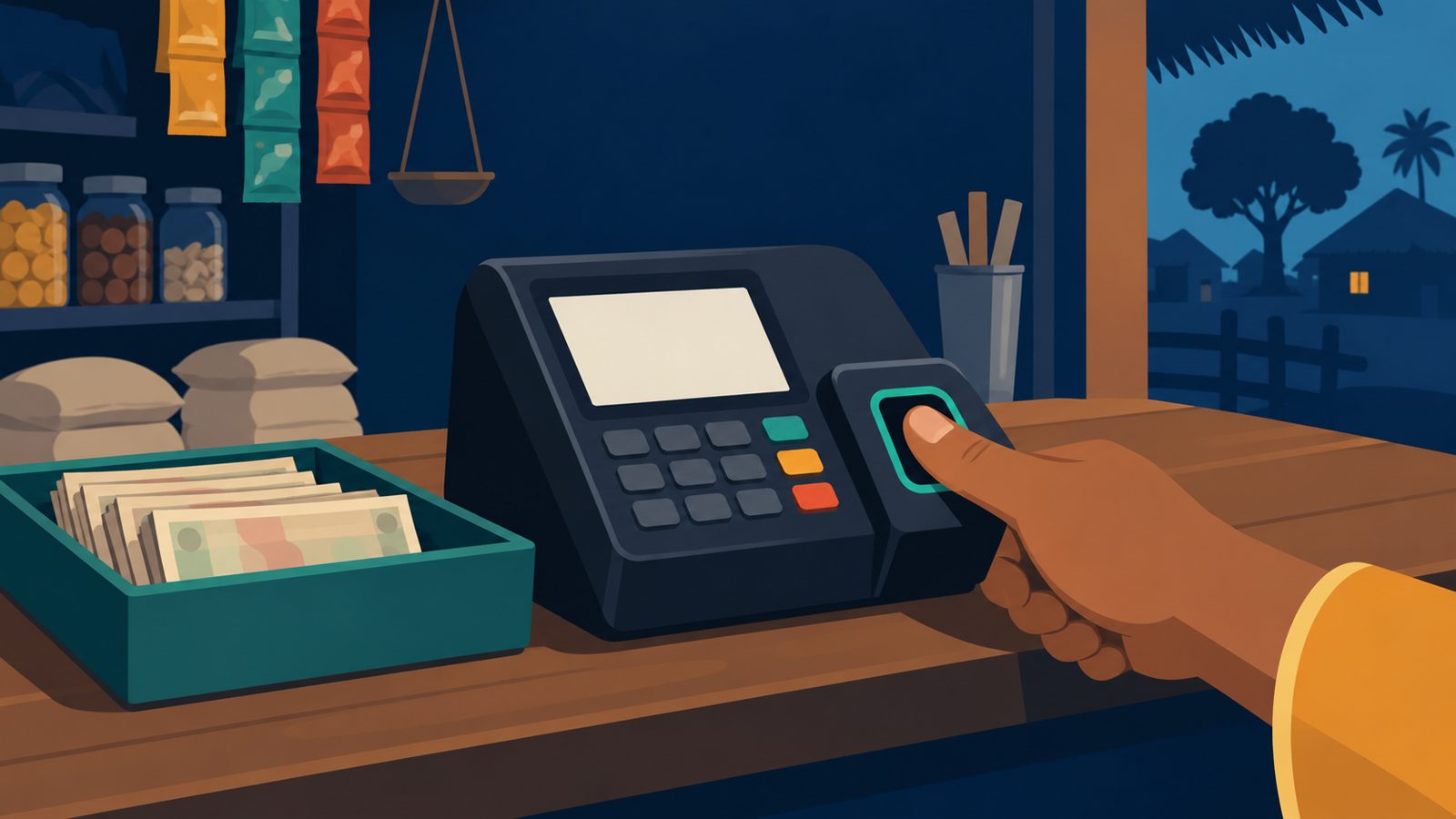
A micro-ATM is a handheld card-and-fingerprint terminal, usually run by a banking correspondent: a shopkeeper or agent who acts for a bank in places without a branch. The Aadhaar Enabled Payment System (AEPS), run by NPCI, lets anyone with an Aadhaar-linked bank account use one with nothing but a fingerprint. NPCI describes the service on its AEPS page.
How a withdrawal works
- You tell the agent your bank and your Aadhaar number.
- You place a finger on the reader. The device sends your number and fingerprint, encrypted, through your bank and NPCI to UIDAI.
- UIDAI answers yes or no. It does not see the amount or the bank balance.
- If yes, your bank debits the account, and the agent hands you the cash and a receipt.
The same steps cover balance enquiries, mini statements and transfers to another Aadhaar-linked account. This is how many people collect direct benefit transfers.
When it fails
Fingerprints worn by manual work, age or injury often fail to match. The CAG's 2022 audit of UIDAI found that poor-quality biometrics cause authentication errors and that residents paid to update them. Ask the agent whether your bank allows another method, and update your biometrics at an Aadhaar centre if failures repeat.
Keeping it safe
- Lock your biometrics on myAadhaar or mAadhaar when you are not using AEPS. Unlock for a few minutes when you need it.
- Count the cash and keep the receipt before you leave the counter. The SMS from your bank should match.
- Do not leave fingerprints on paper or film with anyone who does not need them, and never allow someone to take a print "for verification" outside a device.
- Report an unknown withdrawal to your bank at once, and to the national cybercrime helpline, 1930.
Sources
- National Payments Corporation of India, AEPS product overview.
- Reserve Bank of India, guidelines on business correspondents.
- Comptroller and Auditor General of India, Performance Audit on Functioning of Unique Identification Authority of India, 2021 (tabled April 2022).