
"E-wallet business may not work": the 2015 forecast, ten years on
In September 2015 three of India's best-known business figures doubted digital wallets and Aadhaar. An engineering conference quoted them a few months later. Here is what they said, and what happened.
In September 2015 a panel of retail leaders in India talked about three forces they expected to change the country within five years: going cashless, 4G mobile data, and Aadhaar. This site carried the report under the headline "E-wallet business may not work, say retail experts".1 In March 2016 a paper at a national conference at YMCA University of Science and Technology in Faridabad cited it in a section on the impact of wallet services in India.2
What was said
Kishore Biyani, founder and group CEO of Future Group, was the sceptic. As reported, he said there were only 3.5 crore taxpayers and about two crore credit card users in India. People expected wallet services to earn Rs 10-20 crore, he said, but "till the time black and white money gets debated in the country, I don't think this wallet business will ever work", because a wallet holds only declared, digital money. He also said he was "not a great believer of Aadhaar because 30% of India is not accessible". In the same breath he predicted more than 40 wallet companies within two years, and announced that Future Group was launching its own.1
B.S. Nagesh of the Trust for Retailers and Retail Association of India recalled Nandan Nilekani's view that power was shifting to mobile and peer-to-peer payments. Raghav Bahl, of Quintillion Media, said change would come only with "serious job creation" and a bigger organised economy.1
What happened next
- 11 April 2016. The National Payments Corporation of India (NPCI) launches a pilot of the Unified Payments Interface (UPI) in Mumbai with 21 member banks. Bank apps with UPI reach the public from August 2016.3
- 8 November 2016. The government withdraws Rs 500 and Rs 1,000 notes. Overnight, most of the cash in circulation stops being legal tender, and digital payments surge.
- 30 December 2016. The government launches BHIM, NPCI's own UPI app.
- 2017 onwards. UPI, which moves money directly between bank accounts, takes the role many expected wallets to play. Wallet companies add UPI to survive.
- 31 January 2024. The Reserve Bank of India orders Paytm Payments Bank, the banking arm of India's best-known wallet brand, to stop taking new deposits and top-ups into accounts and wallets.
- August 2025. UPI processes about 20 billion transactions in a single month, according to NPCI figures.3
Who was right
Biyani was half right. Closed wallets, which hold a stored balance inside one company's app, did not become the backbone of Indian payments. UPI did, and UPI is not a wallet: the money stays in the bank account until the moment it moves. His larger claim, that cashless payments would wait on a national argument about black money, did not survive November 2016, when the government forced the argument in a single evening.
His view that 30 per cent of India was out of reach also aged badly for Aadhaar itself. By 2024, 138.3 crore numbers had been issued, more than the adult population.4 Reach was not the problem. The problems that followed were about consent, exclusion when authentication failed, and data security, which the privacy explainer covers.
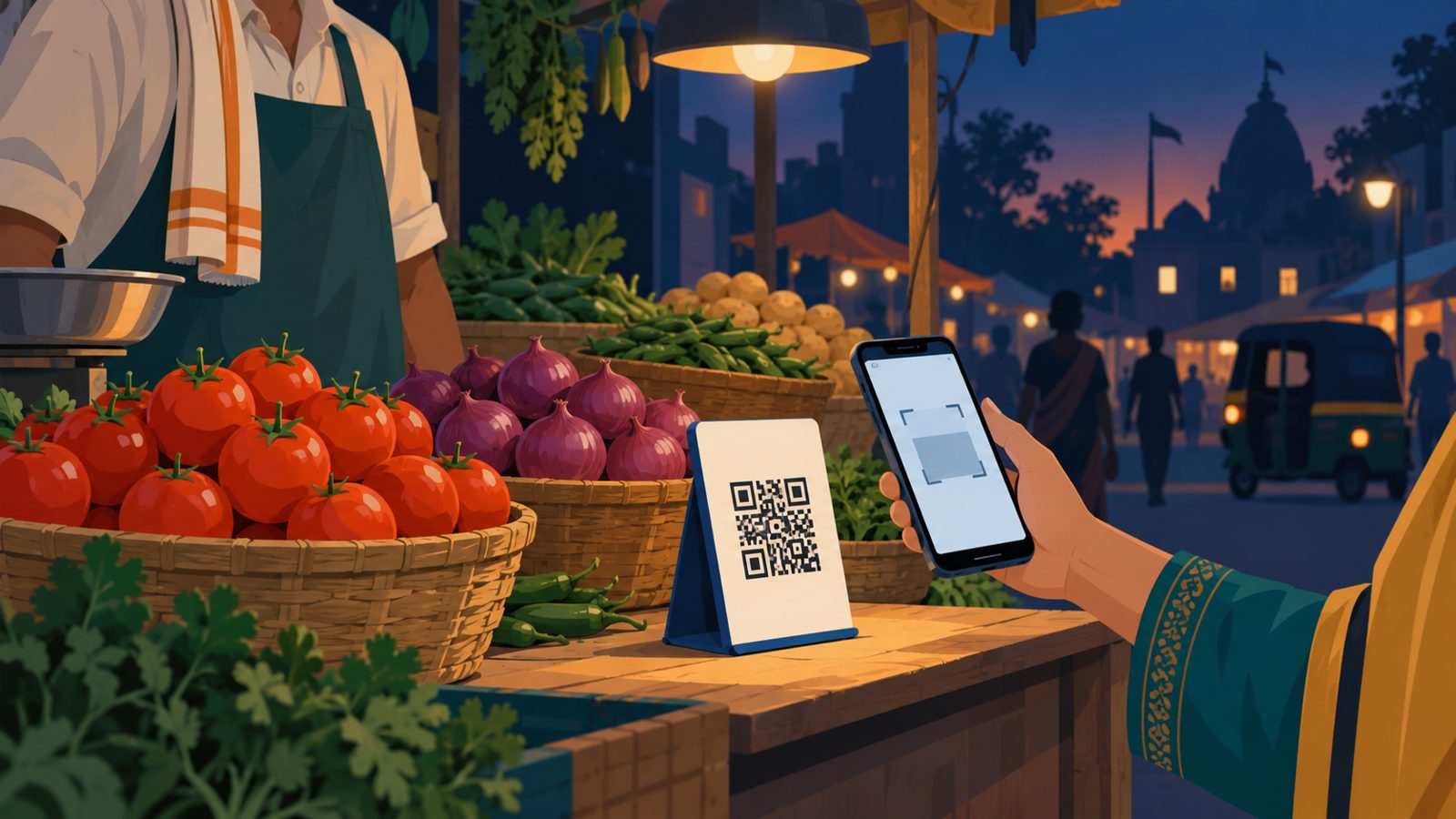
Nagesh's paraphrase of Nilekani held up best. Peer-to-peer, account-to-account payments on a phone are what India now uses at vegetable stalls, and Aadhaar sits underneath some of them: AEPS lets a person withdraw cash with a fingerprint, and Aadhaar-based e-KYC let wallet and payments-bank customers complete identity checks without paper.
Sources
- "E-wallet business may not work, say retail experts", Aadhaar News, 17 September 2015 (post 843), archived by the Internet Archive on 7 April 2016. Quotes are as reported there.
- Proceedings of the National Conference on Role of Science and Technology Towards 'Make in India', YMCA University of Science and Technology, Faridabad, 5-7 March 2016, ISBN 978-93-5265-441-3, reference 8.
- National Payments Corporation of India, UPI product statistics; UPI launch details as recorded by NPCI and the Reserve Bank of India.
- Unique Identification Authority of India, Aadhaar dashboard figures, October 2024.